

Reputation and empathy
People remember how you made them feel

The rollbacks of DEI that started at the beginning of the year sparked conversations about the death of empathy and the return to a command and control style of leadership. A certain CEO of an electric car company declared on a podcast that the fundamental weakness of Western civilisation is empathy. Soon after, he was eased out of his government job and no-one was too sad. Whoops.
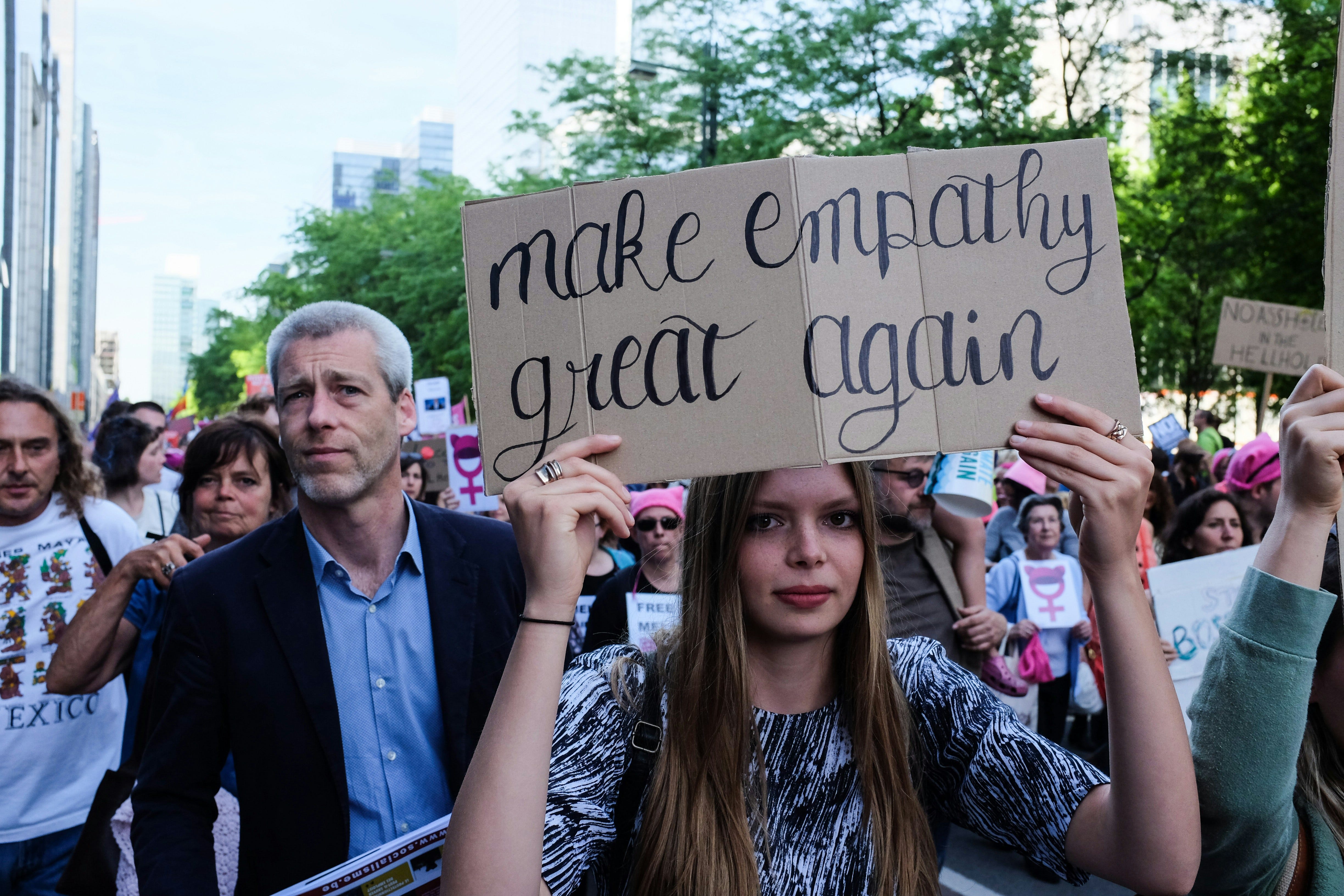
Photo by Floris Van Cauwelaert on Unsplash
Empathy is the ability to share and understand the emotions of others. It is, in fact, the ability to recognise that the person standing before you is another human, with their own discrete emotions and experiences. Narcissists are classically empathy-less.
I had a cry in a coffee shop in Vancouver in June when I read a post from my former colleague, Marcia Beach-Malinowski, who talked about how I made her feel welcome when she arrived at SAP - even though she wasn’t on my team. She remembered that, bought the book and wrote a lovely post about it. How you make people feel is part of your reputation.
Empathy and reputation
Speech Bubbles and We Need New Leaders interviewee Liz Gebhard - a former Target and Amazon executive - told me she sees her ability to be empathetic in balance with having high standards as part of her reputation. She wants to have a reputation for being an inclusive leader, but also a challenging leader. Empathy doesn’t mean you don’t have a high bar, achieve challenging outcomes and be successful, but for Liz it means enabling other people and giving them the space to thrive and grow. She witnessed command and control leadership and leaders who shamed others early in her career and learned that that was not how she wanted to lead. (Learning is another part of leadership that Liz talks about extensively in the podcast.)
She says:
I think of empathy as sort of a blend of what would probably have previously been described as servant leadership, so enablement and building of others. But fundamentally, it's about listening, and it's about adapting, and it's about adjusting. So that's kind of where situational leadership comes into play in some of those kind of traditional definitions of leadership. And I view that as critical if you want a leadership career over a long span of time, the idea of not being adaptable and being able to shift, especially with how quickly the world around us is shifting. I think thinking you can approach the problem set by repeating your same playbook over and over again, acting the same way with every team, command and control, we know all the outcomes.
With the world shifting so fast and so much, using the same leadership playbook over and over again is self-defeating.
Empathy and tech
Founder, CEO and board member Allegra Patrizi (also a Speech Bubbles guest) has watched transformations fail over and over again, because they over-rely on what she calls the rationality mirage. In a LinkedIn post, she announced her new business book Care, Dare, Share: Lead & Thrive with Heart, Mind, AI, and said:
Over my 25-plus years in the C-suite, I’ve seen a stark reality play out time and again: 70-80% of all major business transformations collapse. They don't fail because of flawed strategies or bad technology. They crumble because we ignore the human heart.
We're drowning in data and dashboards, falling for the "Rationality Mirage", a fatal reliance on metrics that are blind to the one thing that truly determines success: your people. This is the leadership crisis of our time.
The combination of empathy and tech is something Speech Bubbles guest Amy Wilson also talked about, especially in the context of product design. She also says:
…. you have to be able to put yourself in other people's shoes. You have to consider their contexts, you have to consider their strengths, because invariably they're going to have different backgrounds, they're going to have different strengths, they're going to have different worries than you are going to have .... And you have to be able to see others for who they are and and why they are in order to motivate them in order to enable them to thrive. Because if you're just inserting your point of view, your worldview and telling people what to do, they're, they're not going to deliver in the same way. And they're certainly not going to build the confidence that you need as a leader for them to have to be able to drive results.
Empathy and leadership
CEO and chair of Boomi, Steve Lucas (who gave me the classic vitamins versus aspirin metaphor that I use when talking about reputation), said in a recent LinkedIn post that empathy defines the best leaders. For him, it’s non-negotiable, and it’s not about being nice to everyone but about ‘understanding what matters and showing up with clarity and focus.’
Steve’s post led me to an article by HRDive which reported on research from Durham University and Athens University which showed that managers who lead with empathy and show concern for workers’ well-being are more likely to increase their team’s performance and productivity than others. So not a weakness, but a strength.
Conclusion
On one level this comes as no surprise. But with Allegra’s rationality mirage and the ongoing focus on AI in mind, it does beg questions about our obsession with data, results and outcomes and when we’ll learn to value our own humanity more. As Liz says, the adaptability inherent in empathetic leadership this will prepare us better for a future of constant waves of change.
**
If you enjoyed this post, you’ll enjoy the ideas we’re discussing in my podcast Speech Bubbles. Please consider subscribing wherever you get podcasts.